







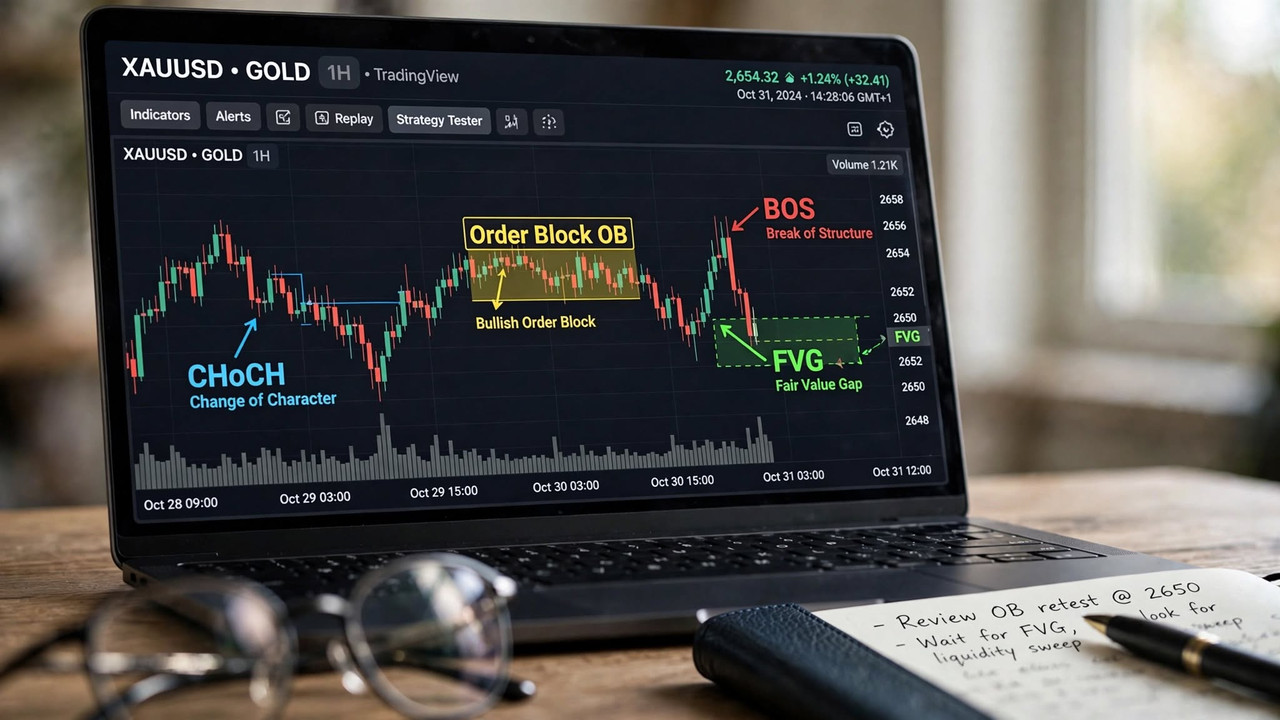

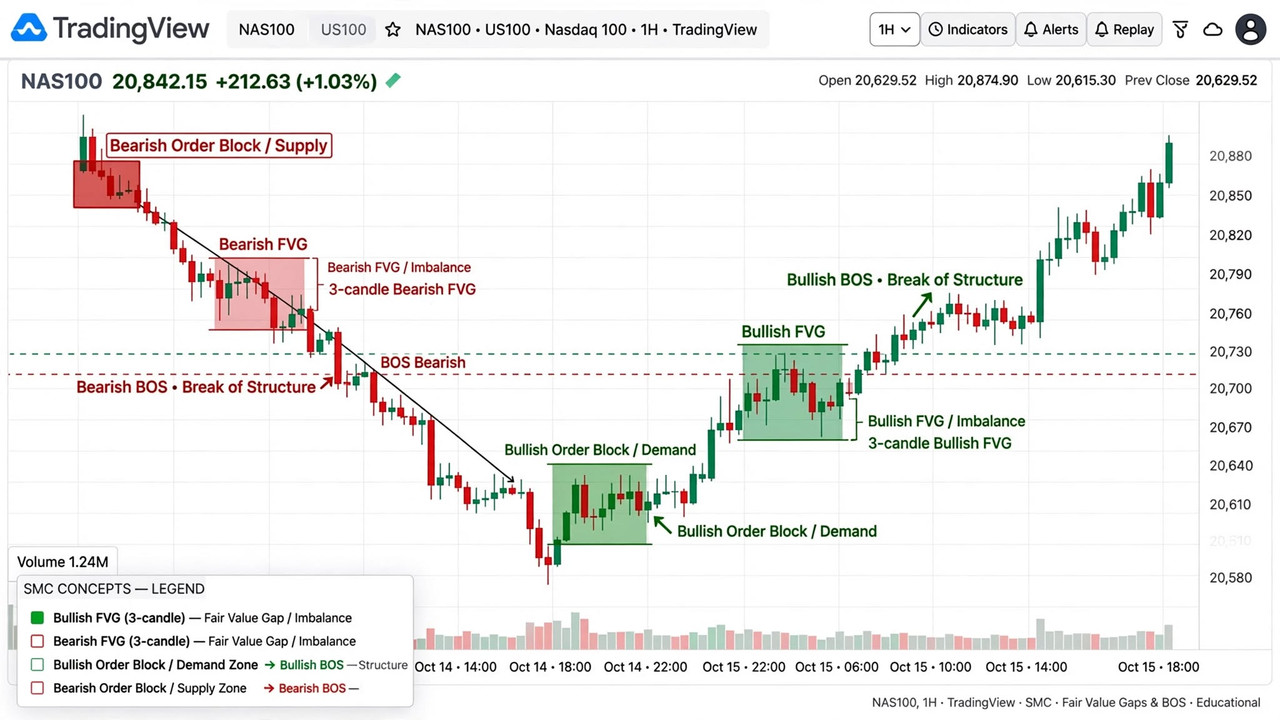
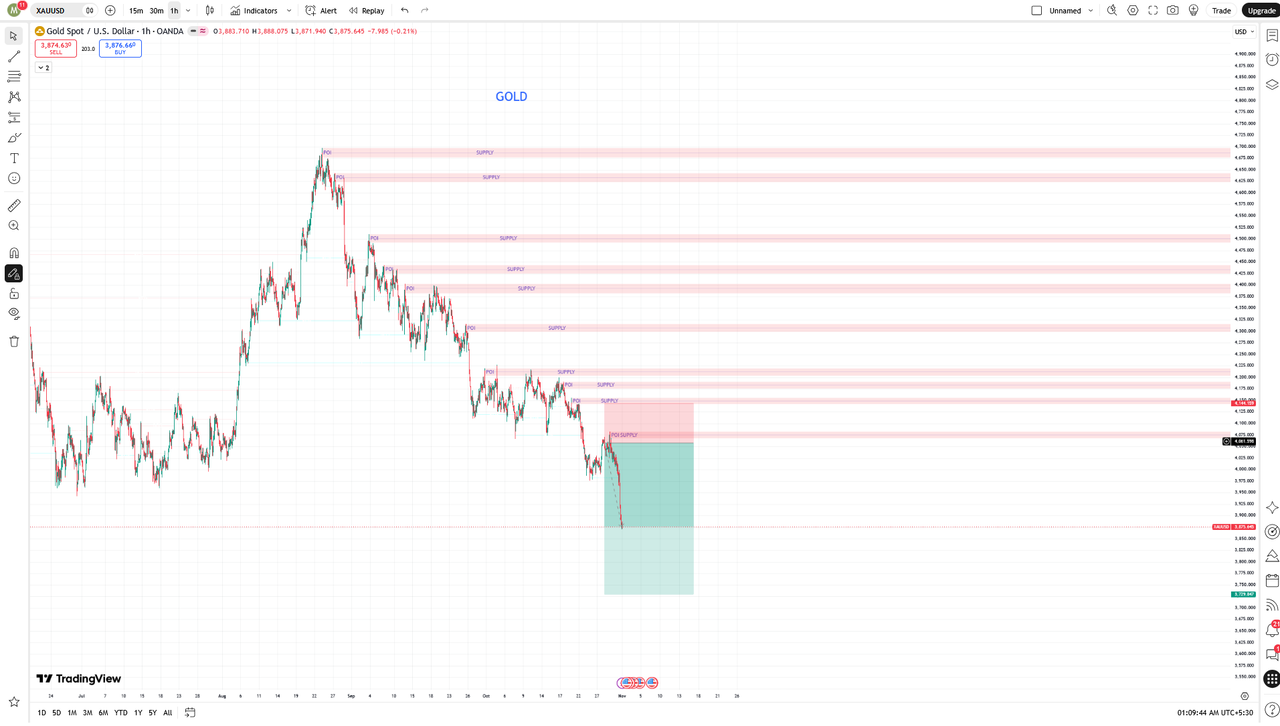
What is this concept?
A bullish order block is the last bearish candle before a strong bullish move. That is the whole definition.
Think about how a bank buys. Suppose a bank wants to buy 500 million EUR/USD. They cannot click buy one time. If they do, price will jump from 1.0800 to 1.0900 instantly. They will get a very bad price. So what do they do? They hide.

They push price down a little bit with one small red candle. Retail traders see that red candle and they start selling. The bank buys all those sell orders. That small red candle is full of bank buy orders. That is the bullish order block.
After that, they push price up very fast. You will see big green candles. That fast move is the proof. Later, price often comes back to that same red candle area to pick up more buy orders. That pullback is where we want to buy.

This is not a normal support. Normal support is made by small traders. Order block is made by smart money. That is why it works better.
Step-by-Step Rule: How to Identify it on the Chart
1. Find a Break of Structure - BOS. This is the first and most important step. Don't look for random green candles. Look for a bullish break. On EUR/USD H1, price was making lower highs and lower lows. It was in a downtrend. Then a strong bullish impulse comes and breaks the last swing high. For example, price breaks 1.0820 high and closes above it. This is called BOS - Break of Structure. It means buyers are now strong. If there is no BOS, there is no valid bullish order block. Always start with BOS.

Entry: Don't buy at the top of the OB. Use the 50% Equilibrium. If your OB is from 1.0780 low to 1.0790 high, the 50% is 1.0785. This gives better risk-to-reward. You can also use the Open price of the OB candle.
Stop Loss: Place SL 2-3 pips below the low wick of the OB. For example, if OB low is 1.0780, SL at 1.0777.
Real Example: GBP/USD H1. London open at 08:30 GMT. Price creates a small red candle at 1.2650-1.2645. Then it breaks the last swing high at 1.2680 with a clear bullish FVG between 1.2655 and 1.2665. You mark the OB. You wait. In New York session, price comes back to 1.2647 which is 50% of OB. On M5 you see a CHoCH - price breaks a small downtrend. You buy at 1.2647.
Trade Management: This is how pros stay alive. Don't hold full lot till final target. Use 1:2 minimum risk-to-reward. If your SL is 10 pips, your TP should be at least 20 pips. When price goes +15 pips in profit, move your SL to breakeven - your entry price. So it becomes risk-free. Then book 50% profit at 1:2, and let the rest run to next high with trailing stop. This way you never turn a winner into a loser.
Invalidation Rule: The OB is dead if a candle BODY closes below the low of the OB. Wick spike below is okay, but if body closes below, banks have failed. Cancel the zone immediately.

Common Mistakes to Avoid
- Trading Asian session order blocks. They look valid but have no volume behind them. Stick to London and New York Killzones.
- Using an order block that is already used 3 times. First return is fresh and best. After 2-3 taps, orders are gone.
- Not waiting for lower timeframe CHoCH. Many traders buy blindly as soon as price touches OB. Wait for M15 to show bullish reaction. Patience pays.
Practical Summary - Checklist
- Was the OB created in London 07:00-10:00 GMT or New York 12:00-15:00 GMT Killzone?
- Did price break last swing high? Clear BOS?
- Is there a small red candle just before BOS? Is there a clear bullish FVG right after?
- Is it a fresh zone on H4/H1?
- Did I go to M15/M5 and see CHoCH or bullish engulfing at 50% Equilibrium?
- Entry at 50%, SL 2-3 pips below wick, TP minimum 1:2, move to breakeven after 1R?


